Afraid of the dentist?
You're not broken.

Dental fear is one of the most common anxieties in the world — and one of the least talked about. Whether it's been two years or twenty, there's a calmer, judgment-free way back to a healthy mouth. This site is the map.

No lectures. No shame. Just honest information and a plan.

Breathe in…
Follow the glow. In as it grows, out as it settles. You're safe here.

Why it's not you

Fear of the dentist is a normal response — not a character flaw

Dental fear usually has real roots: a painful childhood experience, a dismissive provider, needle fear, the loss of control that comes with lying back in that chair. Your brain is doing exactly what brains do — protecting you from something it flagged as a threat.

~1 in 3

36% of adults reported moderate dental anxiety in the largest UK survey to measure it — roughly one in three.

~1 in 8

12% scored as extremely anxious — the level at which people delay or avoid care, often for years.

0

The number of good dentists who will lecture you. Modern anxiety-aware clinics treat returning patients with a plan, not a guilt trip.

Source for the first two: the UK Adult Dental Health Survey 2009, which used the Modified Dental Anxiety Scale and found 36% of adults with moderate dental anxiety and 12% with extreme dental anxiety. Rates vary by study and country; the pattern does not.

The avoidance loop

How fear quietly compounds — and how the loop breaks

If you've avoided the dentist for years, you're probably not dealing with fear alone anymore. You're dealing with fear plus everything avoidance built on top of it. Naming the loop is the first step out of it.

1 · Fear

A bad experience, needle anxiety, or loss of control makes appointments feel threatening.

2 · Avoidance

Skipping one cleaning becomes two, then five years. Relief in the short term reinforces the pattern.

3 · Deterioration

Small, cheap problems become large, expensive ones — silently, and usually painlessly at first.

4 · Shame & dread

Now the fear isn't just the drill — it's the imagined judgment, the cost, the scale of it all. So avoidance deepens.

Here's the honest reframe: the loop doesn't break through willpower. It breaks when the process itself changes — sedation instead of white-knuckling, one comprehensive plan instead of fifteen dreaded appointments, and a provider who starts from "welcome back," not "where have you been?"

See how the process changes

Sedation dentistry

You don't have to be awake for the hard parts

Sedation dentistry exists specifically for people like you. Depending on the level, you'll feel deeply relaxed, drowsy, or lightly asleep — and most patients remember little or nothing. Here's the ladder, from mildest to deepest.

Person resting peacefully under a warm blanket in soft amber lamplight — the calm that sedation dentistry makes possible
Level 1

Nitrous oxide

"Laughing gas." Takes the edge off within minutes, wears off almost immediately. You stay fully awake and can drive home after.

Level 2

Oral sedation

A prescribed pill before your visit. You're awake but deeply relaxed and drowsy; many patients barely remember the appointment.

Level 3

IV sedation

Administered and monitored by an anesthesia professional. You drift into a light sleep. Hours of work can happen in what feels like minutes. The gold standard for high-fear patients and long restorative sessions.

Level 4

General anesthesia

Fully unconscious, hospital-grade monitoring. Reserved for complex surgical cases and extreme phobia — appropriate in specific situations your dentist will discuss.

The math of waiting

Where fearful patients get hit twice — and where the numbers turn around

Long avoidance usually means bigger treatment plans: implants, crowns, sometimes full-arch restoration. In the US, adding IV sedation makes an already large bill larger. This is exactly where treatment in Colombia changes the picture.

Typical cash-pay ranges: US vs. Colombia

Typical 2026 ranges, not quotes. US figures reflect published cash-pay benchmarks; Colombian figures reflect typical private-clinic pricing. Your written treatment plan is the only real number.

Single dental implant (all-in: post, abutment, crown)
US: $3,000–$6,000
Colombia: $1,200–$2,500
Full-arch restoration (All-on-4-style, per arch)
US: $14,000–$36,000
Colombia: $6,000–$12,000
Crown (per tooth)
US: $800–$3,000
Colombia: $300–$700
IV sedation (per session)
US: $500–$1,200+
Colombia: often $200–$500, sometimes bundled
United States (cash-pay)Colombia (private clinic)

Ranges are indicative planning figures drawn from published US cash-pay benchmarks and typical Colombian private-clinic pricing as of 2026. They are not quotes, and final pricing always depends on your case, materials, and clinic. Bar lengths are illustrative of relative range midpoints. Disclosure: we may be compensated if you connect with a clinic through our network; that never changes the numbers above.

Sunrise breaking over the green mountains of the Aburrá Valley, Colombia, with morning mist below
Morning over the Aburrá Valley. Every avoidance loop ends with a first morning.

The Colombia option

What if it wasn't an appointment — what if it was a trip?

For high-fear patients with years of postponed work, treatment in Medellín or Bogotá isn't just cheaper. It restructures the entire experience around the thing you actually need: getting it all done, calmly, in one go.

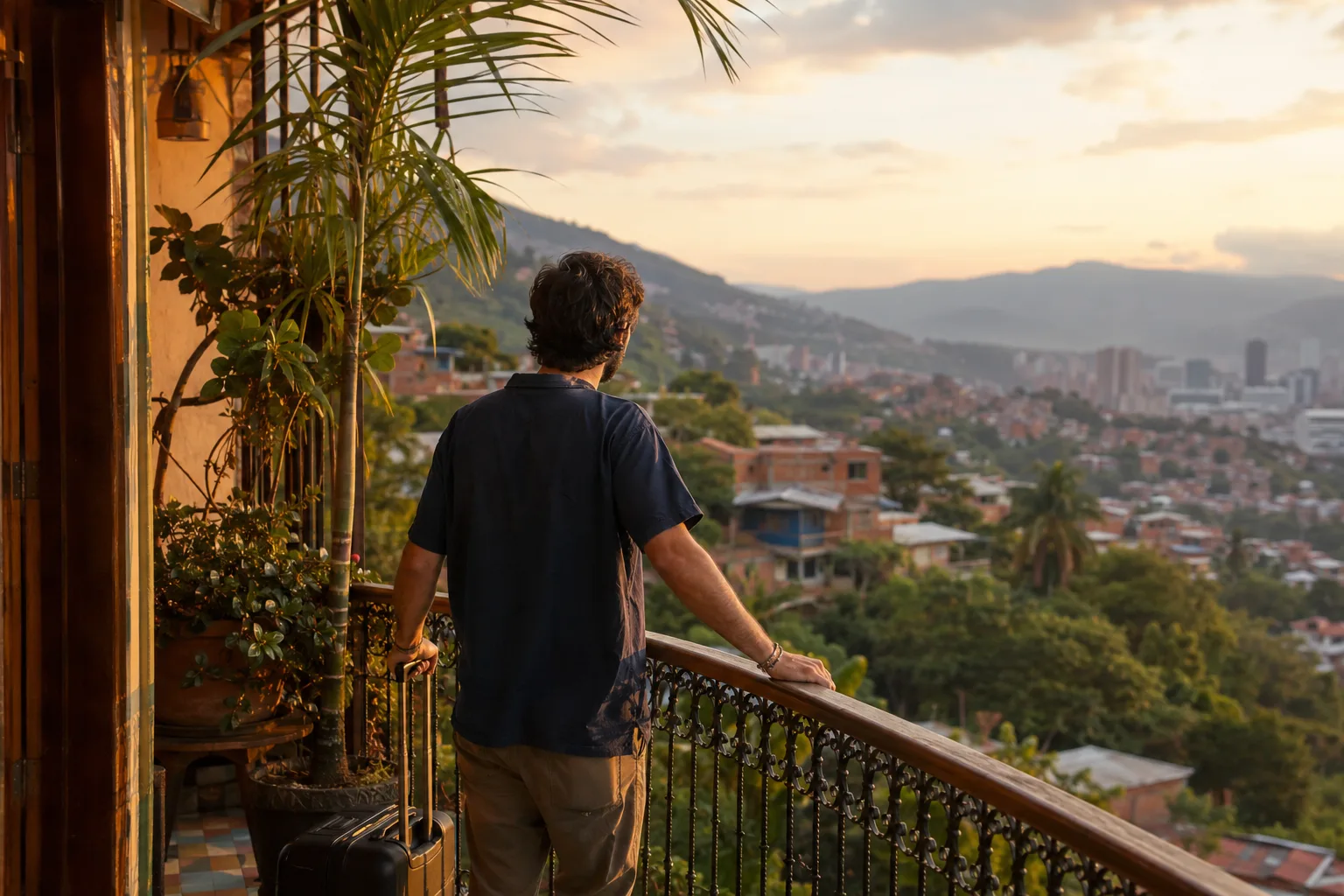
Traveler with a suitcase on a Medellín balcony at golden hour, overlooking the green hillsides and city below

One trip, not fifteen appointments

Years of postponed work — extractions, implants, crowns — compressed into a coordinated 7–14 day treatment plan. You face the fear once, with support, instead of re-living the dread every few weeks for two years.

Sedation is actually affordable

IV sedation with dedicated anesthesia professionals is dramatically more accessible in Colombia, and often bundled into larger treatment plans — so "asleep for all of it" becomes a realistic default, not a luxury add-on.

A genuine fresh start

A new clinic, a new country, no chart history, no one who "remembers your teeth." Recovery happens in a pleasant climate with a coffee in your hand — the dread ritual of the waiting room never even starts.

Credentials matter more than price. In Colombia, the public ReTHUS registry is one starting point for checking licensed health professionals. For dental travel, also ask who will treat you, what the written scope includes, how complications and follow-up are handled, and whether the plan is appropriate for your medical history. Our sister site ColombiaDentist.co covers provider options and credential-checking questions, and ColombiaMedical.co covers the wider medical-travel picture.

Honest answers

Questions fearful patients actually ask

Is dental fear actually common?
Yes — the UK Adult Dental Health Survey 2009 found 36% of adults with moderate dental anxiety and 12% with extreme dental anxiety: roughly one in three and one in eight. Dentists see returning long-absence patients every single week. You will not be their most dramatic case, and you will not surprise them.
Will the dentist judge me for how long it's been?
A good one won't — and anxiety-aware clinics build their entire intake process around not doing this. The first visit is typically just an exam, imaging, and a conversation about options. If a provider makes you feel ashamed, that's information about them, not you. Leave and find another.
What does IV sedation actually feel like?
Most patients describe drifting into a warm, heavy drowsiness within a minute or two, then "waking up" with the work finished and little or no memory of it. You breathe on your own throughout and are continuously monitored. You'll need someone to accompany you afterward and you'll rest for the remainder of the day.
I probably need a LOT of work. Where do I even start?
With information, not commitment. A panoramic X-ray and an exam produce a written treatment plan with real numbers — that's it, that's the whole first step. Most people find the plan is less catastrophic than the version their anxiety wrote. And if the plan is large, that's precisely when the Colombia math gets most compelling.
Is going abroad for dental work safe?
It depends on the individual provider, procedure, your medical history, follow-up and emergency planning. For Colombia, ReTHUS can help confirm professional registration, but no registry or country reputation replaces a written treatment plan and provider-level due diligence. Some cases are better treated close to home.
What if I panic in the chair?
Tell the team beforehand — anxiety-aware clinics establish a stop signal (usually a raised hand) that halts everything immediately, no questions asked. Knowing you can stop at any moment is itself one of the most powerful anxiety reducers. And with IV sedation, this scenario largely disappears: you're resting, not enduring.


Get matched · three small cards

You don’t have to explain everything. Just start.

This is not a diagnosis form. It is three short cards so we understand what would make the next step possible, your timing, and how you want a human to reply.

  • No lecture about how long it’s been.
  • No payment, no obligation to book.
  • With your consent, your inquiry can go to up to 3 anxiety-aware providers so you can compare calmly.
  • The treating clinic, not this site, handles diagnosis and planning.
Pain, swelling, fever, bleeding, or trauma right now? Get local urgent care first. Everything here can wait a day.

Step 1 of 3 · What’s going on

Start with the part that scares you. Nothing else yet.

Tap what fits. There are no wrong answers and no lecture at the end.

What would make the next step feel possible?

Pick one to continue.

What kind of dental help are you weighing?

Pick one to continue.

About a minute, total

Not ready for a form? Send one private WhatsApp message instead.

The Dental Fear is a referral guide, not a dental practice. Provider participation may be compensated. You can use this site purely for research and contact providers on your own.

Ready when you are. Not a moment before.

If you want to talk through options — sedation, costs, what a trip to Medellín actually looks like — message a real human who lives there. No pressure, no scripts, no judgment. Questions are free.

WhatsApp us — judgment-free Prefer a form? Three short cards Typical reply within a few hours, US-friendly time zone